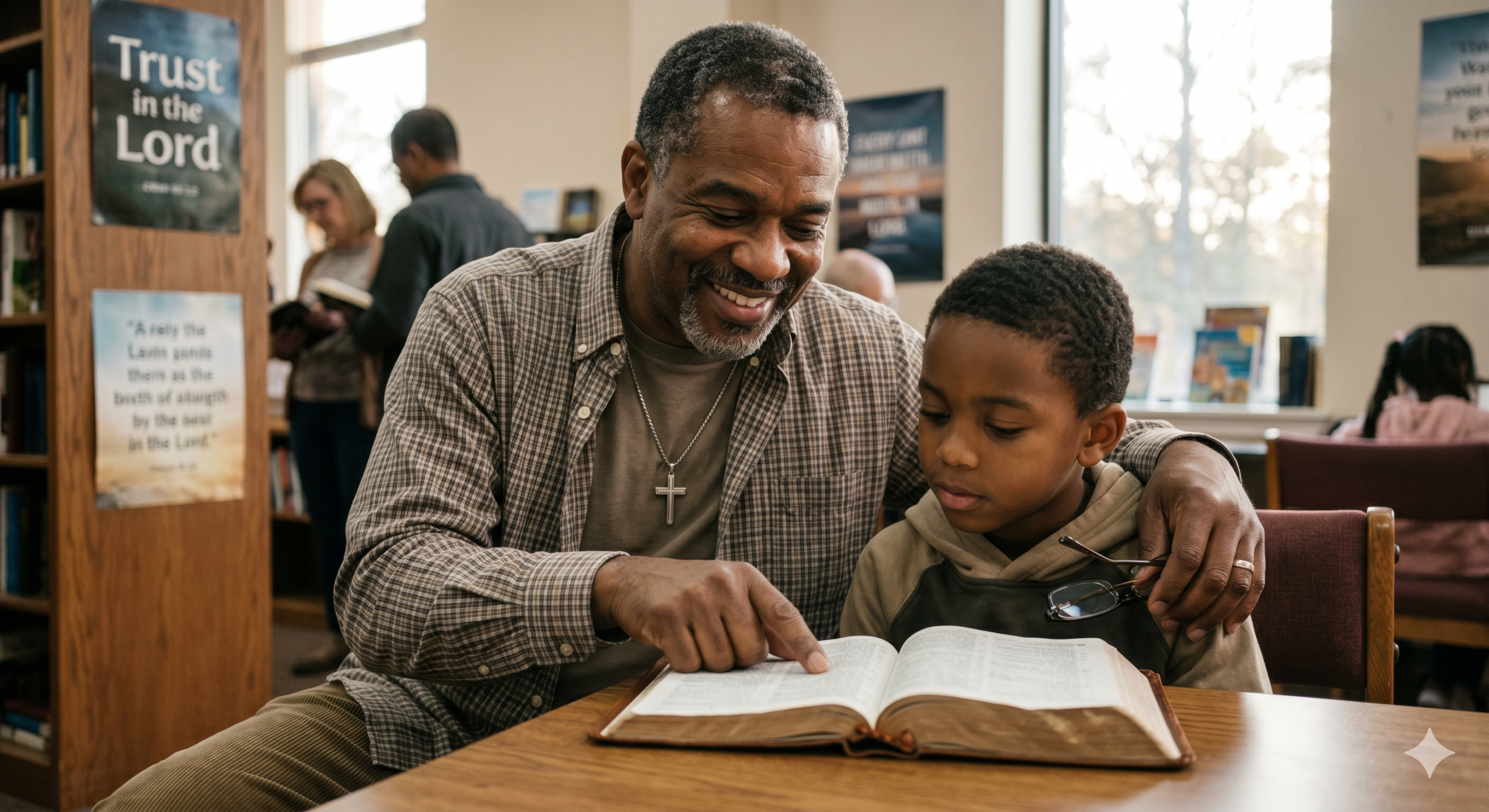
As fathers, we naturally want to protect our children from the storms of life. We think about shielding them from cultural pressures, academic anxieties, and the eventual hardships of the adult world. But true protection isn’t about creating a bubble; it’s about giving our children a foundation strong enough to withstand anything the world throws at them.
Two powerful perspectives—one a statistical look at legacy from Lifeway Research and the other a biblical reflection on true belief from the Institute for Creation Research (ICR)—reveal exactly how a father’s active faith equips and strengthens his children for the future.
The Multi-Generational Legacy of a Dad’s Faith
We often underestimate the sheer weight of our spiritual influence. Lifeway Research highlights a striking reality: a father’s spiritual choices ripple through generations. When a father is intentionally engaged in his faith, attends church, and prioritizes scripture, his children are vastly more likely to stick with their faith into adulthood.
This isn’t about perfection; it’s about direction. When children see their dad consistently looking to God for guidance, faith stops being an abstract concept they hear about on Sundays and becomes a practical blueprint for life. A father’s active faith provides his children with a living template of integrity, accountability, and purpose, giving them a clear sense of identity in a world that constantly tries to redefine who they are.
Moving Beyond “Passive Belief”
But what kind of faith actually produces this strength? The ICR article draws a crucial distinction between merely agreeing with a set of facts and possessing a deep, active biblical faith. True faith is not passive. It is a confident reliance on the character and promises of God, even when the culture or our immediate circumstances scream otherwise.
When we model this deeper, foundational faith, we teach our children how to develop their own roots. They learn that faith isn’t a fair-weather emotion; it is an anchor. By watching us trust God’s Word through difficult seasons, our kids observe firsthand that God is trustworthy. This observation shifts their perspective, transforming faith from a set of rules they have to follow into a source of personal strength they can draw from.
Forging Armor for the Next Generation
The world our children are growing up in requires serious spiritual and emotional resilience. If we want them to stand firm against compromise, doubt, and hardship, we must show them what a steadfast walk with God looks like.
Your faith is the ceiling of your children’s spiritual growth. When you choose to pray boldly, study scripture intentionally, and lead your family with humility, you aren’t just managing your own spiritual life—you are actively forging the armor your children will wear into the world. Let’s lead with intention, knowing that the steps of faith we take today are paving the path for our children’s strength tomorrow.